
Dark accent walls had a moment, and now plenty of Toronto homeowners are trying to paint over them. The frustrating truth: going from dark to light is harder than it looks. With the right approach, you get a clean result in three coats. Without it, you spend money on four or five coats and still see the old colour ghost through.
Here's how professionals handle it.
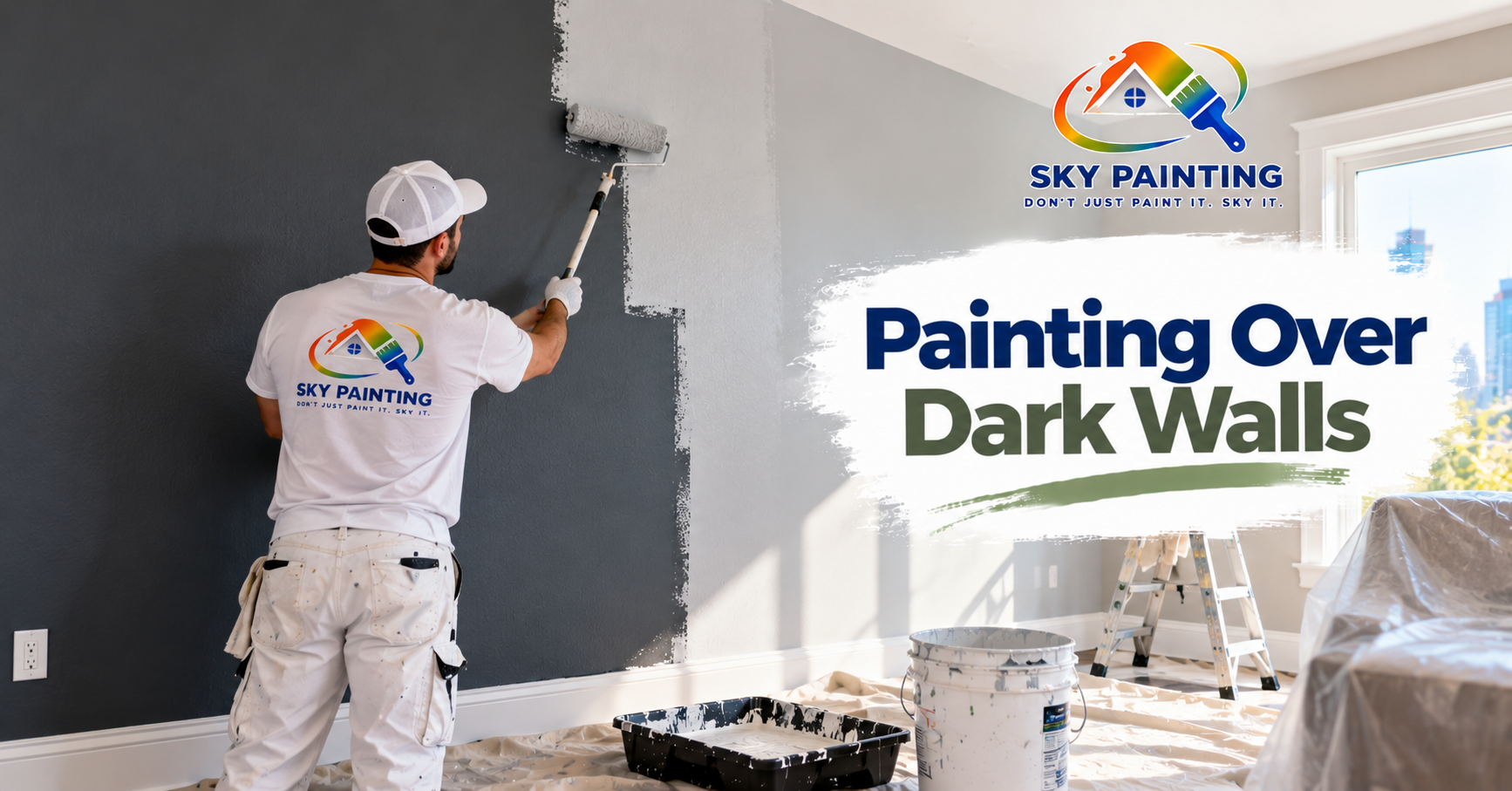
Why dark walls don't just disappear under light paint
Paint is transparent to a degree — even the best latex paint lets some of the surface below show through, especially on the first coat. Light colours contain less pigment than dark ones, which makes them less opaque. When you apply a light grey over a dark navy, the grey shifts noticeably darker than it looks on the chip — not because the colour is wrong, but because the dark wall beneath is changing how it reads.
Two coats of a light colour over a dark wall almost never achieves full coverage. Three coats often will — but that's expensive and time-consuming compared to the proper approach.
The right approach: primer first
The professional solution is a tinted high-hide primer. Here's how it works:
- Step 1: The paint supplier tints the primer to a mid-tone — roughly halfway between the dark existing colour and the new lighter colour. This is an inexpensive add-on at any paint store.
- Step 2: One coat of tinted primer over the dark wall. This neutralizes the dark colour and creates a uniform base.
- Step 3: Two coats of the new finish colour. Because the primer has already neutralized most of the dark colour, two coats of finish paint achieves true, even coverage.
Total: three coats, but two of them are fast and the result is clean and consistent.
The special case of red walls
Red paint is the hardest colour to cover in all of painting. Red pigment behaves differently from other colours and bleeds through standard primers readily. Covering a saturated red wall well requires either a shellac-based primer (like Zinsser BIN) or a dedicated stain-blocking primer as the first coat — before applying a standard tinted primer or going straight to finish coats.
If you're covering a deep red feature wall, budget for four coats total and plan for the job to take an extra half day.
Common mistakes that lead to blotchy results
- Skipping primer entirely — the biggest mistake. Even premium finish paint is not a substitute for primer.
- Using untinted primer — white primer over dark paint still needs 2–3 coats of finish colour. A tinted primer dramatically reduces this.
- Applying coats too thick — thick coats take longer to dry and don't cover better than two thinner coats. Thin coats and proper drying time between them produce better adhesion and coverage.
- Not allowing full drying time — applying the second coat while the first is still wet lifts the first coat and creates uneven coverage.
What this means for your quote
When you submit photos of your space through our online quote form, mention any dark walls that need covering. We factor in primer and the extra coats required so you get a complete price upfront rather than surprises mid-job.
Our interior house painting service includes proper primer as standard on any job going from dark to light.