
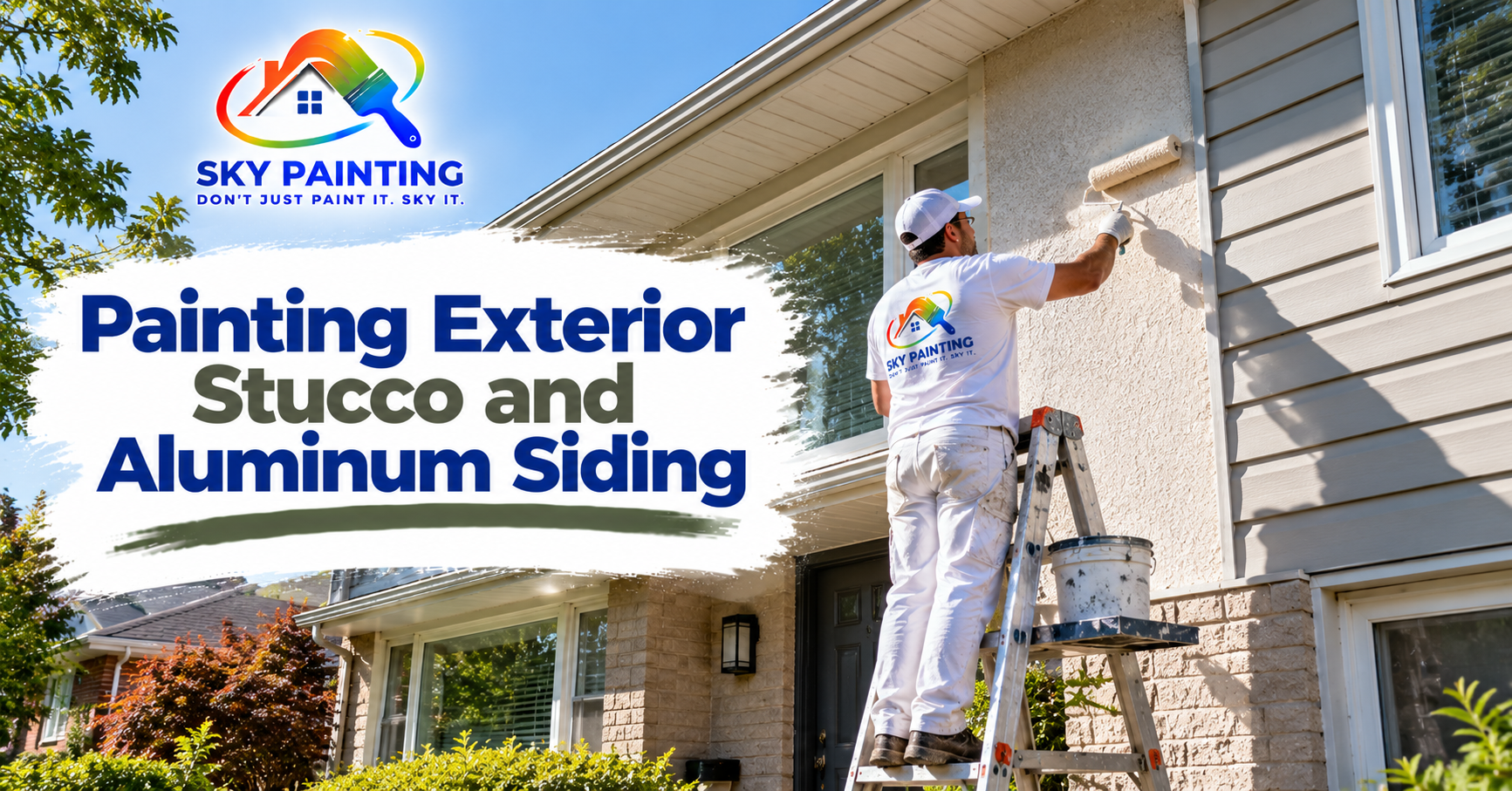
Both stucco and aluminum siding can be repainted — but they are nothing alike in terms of how that work gets done. Each surface has specific failure modes, specific primer requirements, and specific paint products that will actually last in Ontario's climate. Using the wrong approach on either one means the paint peels within two or three seasons.
Get a free written quote — no site visit needed.
Send photos of your space and Reza will send a line-by-line estimate within 24 hours. Serves Toronto and the GTA.
Start your free quote →Painting stucco in Ontario
Stucco is a cement-based product. It is porous, it expands and contracts with temperature, and it develops hairline cracks over time — especially on Ontario homes that see -20°C winters and +35°C summers. These properties dictate every product choice.
Prep for stucco
- Power wash thoroughly. Remove all dirt, mildew, and loose paint. Let dry completely — stucco holds moisture and needs at least 48–72 hours of dry weather before painting.
- Patch cracks with elastomeric caulk or filler. Standard caulk is not flexible enough — it will crack again within a season. Use an elastomeric crack filler that can move with the stucco.
- Prime with masonry primer. A dedicated masonry primer seals the porous surface and ensures the topcoat bonds rather than soaking in unevenly.
Paint product for stucco
Use an elastomeric exterior paint. It contains rubber polymers that allow it to stretch and compress as the stucco moves. On a properly primed stucco surface, a quality elastomeric product (Sherwin- Williams Loxon, Benjamin Moore Elastomerix) will bridge small hairline cracks and last 10–15 years rather than the 5–7 you would get from standard exterior latex.
Elastomeric paint is thicker and requires spraying rather than rolling for proper coverage and film build. This is another reason stucco painting is not a typical DIY project.
Painting aluminum siding in Ontario
Aluminum siding is factory-finished with a baked-on coating that chalks and oxidizes over time. The chalky layer is the enemy of adhesion — paint applied over oxidation without proper prep will peel within a year.
Prep for aluminum siding
- Power wash to remove oxidation and chalk. Test by rubbing your hand along the siding — if your hand comes away with a white chalky residue, the surface needs more cleaning. TSP or a dedicated aluminum siding cleaner works well.
- Light scuff-sanding is optional but helpful. A light pass with 120-grit scuff pads improves adhesion, especially on very smooth factory finishes. Full sanding is not required.
- Prime with an adhesion-promoting primer. This is not optional. A bonding or adhesion primer creates a grip layer between the slick aluminum surface and the topcoat.
Paint product for aluminum siding
Use a 100% acrylic exterior paint formulated for metal and hard surfaces. Sherwin-Williams Duration, Benjamin Moore Aura Exterior, and similar premium acrylics provide good adhesion and colour retention. Avoid oil-based paints on aluminum — they become brittle over time and crack.
Colour choice matters here: very dark colours on aluminum siding can cause warping because aluminum conducts heat readily. Stick within a few shades of the original colour or choose medium tones.
Why spraying is preferred
Both surfaces benefit from spray application. Stucco's textured surface makes rolling labour-intensive and inconsistent. Aluminum siding's horizontal channels are faster and more even when sprayed. A professional with airless spray equipment can coat a typical house exterior in one day. Rolling the same surface takes two to three days and produces a thinner film with less penetration into the texture.
When to paint vs when to replace
Painting makes sense when the substrate is structurally sound. For stucco: if there are large sections that are hollow-sounding when tapped, or cracks wider than 5mm, have a mason assess before painting over. For aluminum siding: if panels are deeply dented or have been breached by moisture behind them, repair or replacement of affected panels comes first.
In most cases, painting costs 20–30% of what replacement costs and achieves a comparable visual result for 10–15 years.
Best time to paint exterior in Ontario
Late spring and early fall are ideal — temperatures between 10°C and 25°C, low humidity, and no frost overnight. Avoid painting in direct summer sun above 30°C (the paint dries too fast and does not bond properly) or when rain is forecast within 24 hours.
For a written estimate on exterior painting — stucco, aluminum, or any other surface — submit a free quote request with photos of your home's exterior. We serve homeowners across Toronto and the GTA.