
Bad prep is the single most common reason paint jobs fail early. Paint peels, bubbles, or shows patches not because the paint was cheap, but because the surface underneath was not ready. The good news: proper preparation is straightforward if you know the steps and don't skip them.
Get a free written quote — no site visit needed.
Send photos of your space and Reza will send a line-by-line estimate within 24 hours. Serves Toronto and the GTA.
Start your free quote →The preparation checklist
Work through these steps in order. Each one sets up the next.
- Clear the room. Move furniture to the centre or out of the room entirely. Remove switch plates and outlet covers. Take down curtain rods and wall hooks.
- Protect what stays. Cover floors with drop cloths — canvas holds better than plastic, which shifts and bunches. Run painter's tape along baseboards, door frames, and window trim.
- Clean the walls. Wipe down with TSP or a sugar soap solution to remove dust, grease, and residue. Pay extra attention to kitchens, bathrooms, and areas near light switches. Let dry completely — damp walls and fresh paint do not get along.
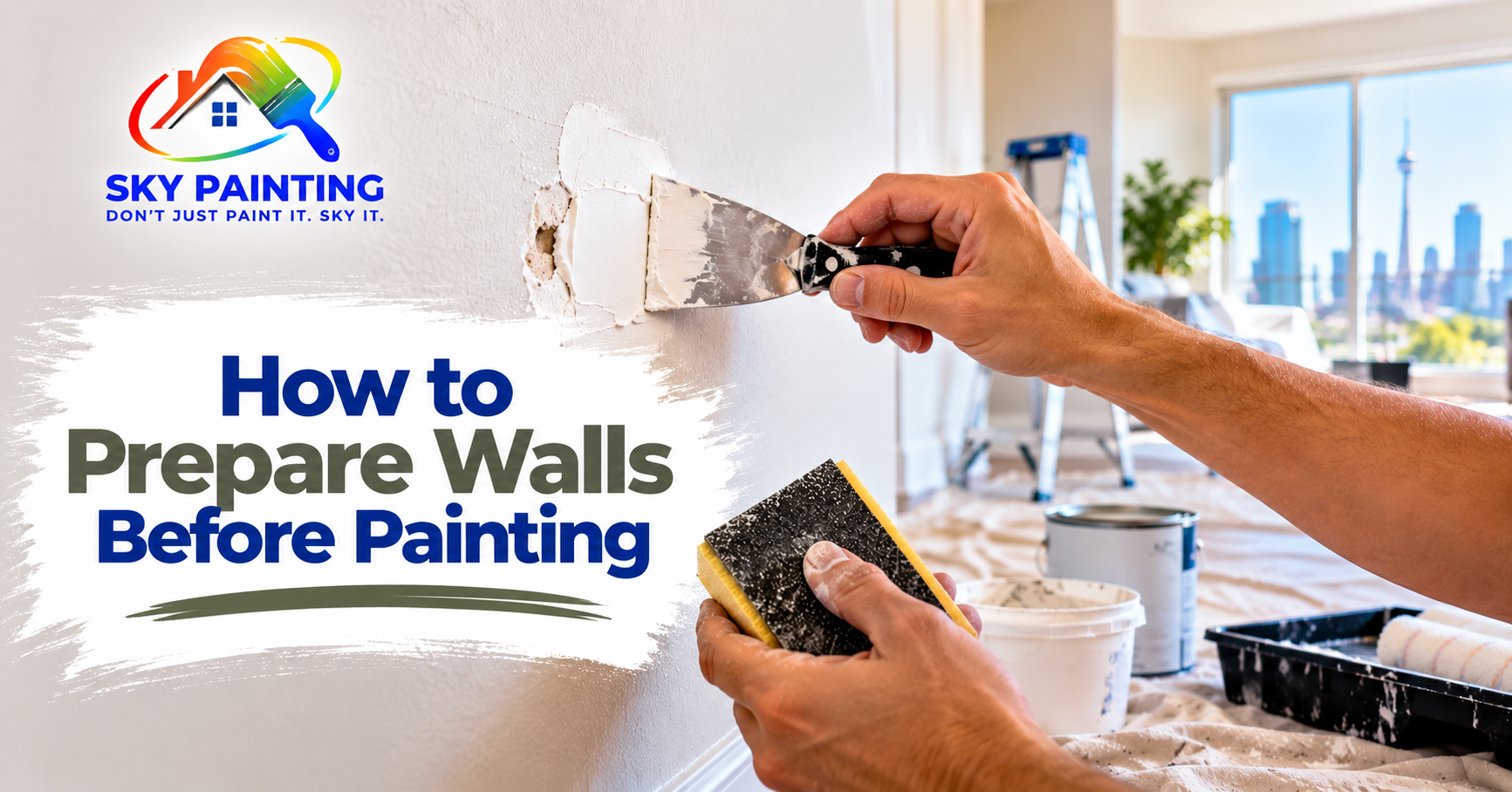
- Fill all holes and cracks. Use spackling for small nail holes. Use joint compound for larger repairs. Let each coat dry fully before adding the next — most compounds shrink slightly as they dry and will need a second pass.
- Sand smooth. Sand all filled areas until flush with the surrounding wall. Use 120-grit for initial sanding and 220-grit to finish. Wipe away dust with a damp cloth and let dry.
- Prime as needed. See the table below for when primer is required. Never skip primer on fresh drywall — the paper face will absorb paint unevenly and show every seam.
- Caulk the gaps. Run a thin bead of paintable caulk along the joint where the wall meets trim. Smooth with a damp finger. This step alone makes an amateur paint job look professional.
Surface condition guide
| Surface condition | Recommended prep steps |
|---|---|
| Previously painted, good condition | Clean, fill nail holes, spot-prime repairs, paint |
| Previously painted, stained or discoloured | Clean, stain-block with oil-based primer, topcoat |
| New drywall (unpainted) | Sand seams, apply drywall primer, two finish coats |
| Bare wood (trim, doors) | Sand, wood primer, two topcoats |
| Previously glossy paint | Dull with 120-grit, clean, adhesion primer, topcoat |
| Cracked plaster | Stabilise cracks, skim coat, prime, paint |
| Water-stained ceiling | Fix leak source, oil-based stain blocker, two finish coats |
Filling holes: spackling vs joint compound
Both products fill holes, but they are not interchangeable.
Spackling dries in 30–60 minutes and sands easily. It is ideal for nail holes, small dings, and hairline cracks. It shrinks less than joint compound and does not require multiple coats for small repairs.
Joint compound (also called drywall mud) takes longer to dry — often 24 hours per coat — but feathers out over a wider area without creating a ridge. Use it for repairs larger than about a centimetre across, for patching cut-out sections, or for skim coating a whole wall.
When to use primer vs paint-and-primer
Paint-and-primer products have improved significantly. For a same-colour repaint on walls in good condition, they work fine.
Use a dedicated primer when:
- You are painting new drywall for the first time
- The surface has water stains (use oil-based stain-blocking primer)
- You are making a dramatic colour change — especially going from dark to light
- You are painting bare or previously stained wood
- You are painting over a glossy finish without sanding
Protecting floors and trim
Canvas drop cloths are worth the investment. They absorb drips, do not slip, and can be reused for years. Lay them flat and push them tight against the baseboard.
For painter's tape: use a quality tape (Frog Tape or 3M 2090 Blue) and press the edge firmly. Remove the tape while the paint is still slightly wet — not after it has fully cured — pulling back at a 45-degree angle. If you wait too long, the paint film tears instead of releasing cleanly.
Why prep matters more than paint brand
A $90/gallon premium paint applied over a poorly prepared surface will peel faster than a mid-range paint on a properly prepared wall. Paint is a coating — it requires something solid and clean to bond to. No paint formulation compensates for grease, dust, or damaged substrate.
Professional painters spend close to half their project time on preparation. If a quote seems unusually cheap, check whether prep is included — vague scope is the most common source of disappointing results.
If you are hiring a painter, submit a free online quote request and mention the condition of your walls. We assess the prep requirements upfront and include everything from cleaning to caulking in the written estimate. We serve Toronto and the GTA.